

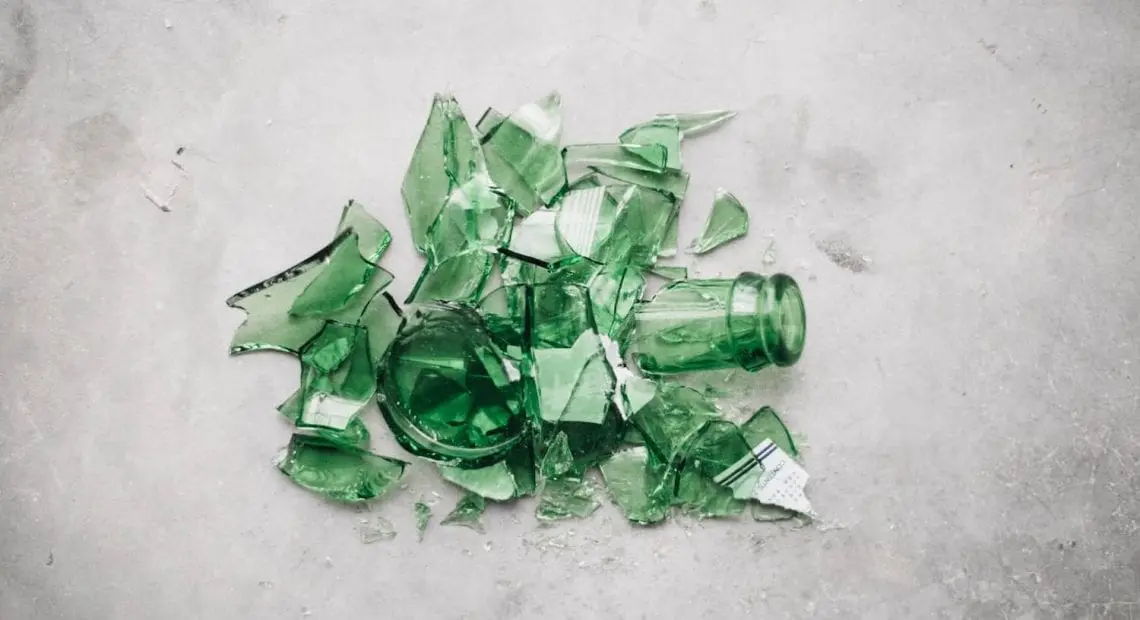
Dropped a wine glass? Put a cricket ball through a window? We’ve all been there: you’ve broken some glass and you’re not sure how to dispose of the shards safely. Most of us would have broken a glass object in our house at one time or another, but many of us are unsure of how to dispose of broken glass properly.
Today, we wanted to clear up the uncertainty and provide some clarity on how to dispose of broken glass in Australia. We will delve deep into best practices for recycling glass, why you can’t recycle every type, and detail your different glass recycling options.
I’ve Broken Some Glass! What Do I Do?
First of all, regardless of how you choose to decide of glass, you have to make sure you are keeping yourself and those around you safe. Glass is extremely sharp and painful when it penetrates the skin and broken glass can cause lacerations, cuts, puncture wounds which can result in serious injury.
Glass items are everywhere in our house, most of us drink out of glass, place flowers in vases, store our food in glass jars and containers and have windows made of glass. Glass items are extremely useful and versatile, yet when broken, glass can be a bit of a headache to dispose of. Not to mention, a hazard to handle!
The first thing you should do is clear out the area, and make sure everyone is wearing shoes. Secondly, you need to remove the large shards and safely dispose of them (more on that later). Finally, you need to vacuum up the small pieces of glass and ensure that there are no tiny specks left!
How is Broken Glass Disposal Different from Normal Glass Disposal?
Recycling glass products is standard across Australia. Most people will dispose of their glass in the recycling bin, as you would with paper and cardboard. Several items are safe to be recycled in your yellow bin, including glass jars, bottles, drinking glasses, and other glass containers. When recycled at a proper recycling facility, these items are melted down, reformed, and reused repeatedly.
However, several glass products, such as mirrors, light bulbs, ovenware, and crystal glass, cannot be recycled in Australia. These items are not broken down in the same way, so they cannot be thrown into your yellow bin. Well, the same goes for broken glass.
You are not allowed to dispose of broken glass in your recycling bins because it cannot be recycled the same way regular glass products are. Sharp shards of broken glass also pose a significant hazard to the people who collect your rubbish, so you must be extremely careful how you dispose of it.
Other Glass Items that cannot be recycled in your yellow bin include:
- Mirrors
- Light Bulbs
- Ovenware
- Crystal Glass
- Broken Glass
- Ceramics
- Over Proof Glass
- Drinking Glasses
- Windows
- Windows/Windscreens
- Light Globes
- Medical Glass
What to Do with Broken Glass
When figuring out how to dispose of broken glass, it is important that you are doing so in a safe manner. Glass can break into various shards and has the potential to cut and cause injury. Additionally, when glass into very small pieces it can be hard to spot. Here are some tips for the best way to dispose of glass when it first breaks.
- Make sure you are wearing enclosed shoes. Stepping on broken glass is easy to do and incredibly painful. When cleaning up broken glass make sure to wear appropriate footwear
- Collect all the broken glass into a pile. Use a broom or brush and dustpan to collect the various pieces of glass.
- Vacuum Remaining smaller Pieces. To ensure your area is free from any pieces of glass, even the pieces you can’t see, use a vacuum to clean up the remaining pieces.
Option 1: Throwing Away in The Garbage Bin
Now that you have your pile of glass, the first option is disposing of it in your general waste bin as it cannot be recycled. Broken pieces of glass often pick up other contaminated material and do not melt at the same temperatures as recyclable glass material. If incorrectly recycled with normal glass, broken glass has the potential to contaminate otherwise recyclable batches of glass. So, here is how you can dispose of broken glass in your garbage bins.
- Place all of the larger pieces together in a pile; this could be wrapped up in newspaper, cloth or another material that can hold the glass and will not be cut through easily
- Put the remaining smaller pieces in the pile
- Make sure all of the glass is contained within whatever you have decided to wrap it in. This may require a few layers of the material you are using to wrap the glass in
- Seal your packaging with sticky tape to ensure it all stays together
- Make sure the package is small enough to fit in your garbage bin
- Mark the package with “Broken glass” to ensure those handling your rubbish are aware of what is in there and do not injure themselves
Please note: If your wrapping is not secure enough to safely contain the glass, consider a small cardboard box to ensure no glass falls out. Knowing how to dispose of broken glass also means knowing how to do it in a safe manner. The purpose of wrapping the glass is to ensure no one gets injured whilst disposing of your rubbish; including the council garbage professionals who come and collect your bins.
But how do I dispose of broken glass without using my garbage bin? Well let’s look at option two.
Option 2: Recycling at a Resource Recovery Centre
Across Australia, most council areas have local resource recovery or recycling centres where you can take your broken glass to be correctly and safely recycled. When we think of the best way to dispose of broken glass, this would be the ideal solution when you have too much glass to fit into your regular garbage bin. Choosing a trusted recycling facility is also an excellent way to know you made a sustainable choice.
Just like in option 1, it is crucial to reiterate the importance of safely securing the broken glass into a package or container. Whether for yourself in the transport to the recycling facility or the person working at the centre, the broken glass must be securely packaged to prevent any injury or damage.
Here’s how to dispose of broken glass at your local recycling centre:
- Call up ahead to ensure they are open (Centres having varying hours of operation and may not always be open during standard business hours)
- Ensure they can receive your glass items
- Arrange a time to deliver your broken glass
- If it is being picked up, make sure to arrange a suitable time for pickup and have your package available
Please note: The rates at each centre may vary and a cost may incur for your broken glass disposal. Make sure check ahead of time to be aware of the charges involved.
Option 3: Contact Rubbish Removal Professionals
If you are unsure of how to properly dispose of broken glass or have a particularly substantial amount, contact rubbish removal professionals such as Ridly, who will happily advise you on what to do with broken glass and even take it away for you.
Rubbish removal professionals are a great idea if you are unsure what to do with broken glass, especially if you have a large amount of it. By employing a team of professionals, you can be guaranteed they will safely take your broken glass away and dispose or recycle it in the most appropriate manner.
This can also be a much safer way to dispose of broken glass if you are worried about your own safety or those who live with you. As rubbish removal professionals, they will have all the necessary equipment and safety gear to safely remove any broken glass for you. Once they pick it up, the rubbish removal company will take it to the appropriate location. Although this will incur a cost on your behalf, it will save you time and means you won’t have to worry about having to figure out how to dispose of broken glass.
This is also a great solution if you are a commercial business and have various types of glass or broken glass you need to dispose of. Many businesses need help with rapid removal of glass items all throughout the week, a rubbish removal professional is a great solution for a speedy and safe pick up of commercial waste.
How Is Glass Recycled in Australia?
In most cases, glass suitable for recycling is taken to a recycling sorting facility and separated into the appropriate streams based on colour and glass type. The glass is melted down and reformed into new products using several material recovery processes. When glass is made from recyclable materials, it is handled correctly, and it doesn’t get contaminated in the process; it can be infinitely recycled.
Recycling glass is a vital, energy-efficient process in any community. Remaking and repurposing glass takes considerably less energy than creating new glass products from virgin materials. So, by taking the steps to dispose of your glass responsibly, you make a big difference to the environment.
Why Can't All Glass Can Be Recycled?
As mentioned above, there are various glass items that even when whole cannot be recycled. As glass items are used for various applications, there are many types of glass produced using different manufacturing techniques. Kitchenware is often made with borosilicate so it can withstand extreme temperature changes in ovens and other cooking applications. Window glass is also produced differently so that it is safer and more durable. Some windows are decorative and have inks and other finishes applied to them. With various materials and different melting points, these types of glass have the potential to contaminate otherwise recyclable materials and even damage the equipment within the recycling facility.
Get Your Glass Removed Today
Still not sure how to dispose of broken glass? Not to worry, at Ridly we are committed to helping all of our customers with their rubbish removal needs. We will happily pick up your broken glass, as well as many other household waste and rubbish, and take them away for disposal and recycling. We are passionate about sustainable practices and aim to recycle as much as possible with our resource recovery partners. If you need help with a rubbish removal, request a quote from us online or call 0491 181 130.